
Understanding Probate vs. Trust Administration in Nevada: Costs, Benefits, and Legal Guidance

Navigating the intricacies of estate planning can be daunting, particularly when considering probate versus trust administration in Nevada. Each process offers distinct pathways for managing a deceased individual’s assets, with unique implications for beneficiaries. Understanding the nuances between these two approaches is crucial, as they affect costs, timeframes, and the level of judicial involvement. This article explores key aspects of probate and trust administration, helping individuals make informed decisions regarding their estate plans.
In this discussion, we will compare the costs and benefits of both probate and trust administration. Additionally, we will explore crucial differences between the two processes and provide insights into how legal guidance can facilitate smoother transitions. Understanding these elements not only aids in efficient estate management but also highlights strategies that can minimize probate costs and avoid protracted court procedures.

Comparison of Probate and Trust Administration in Nevada
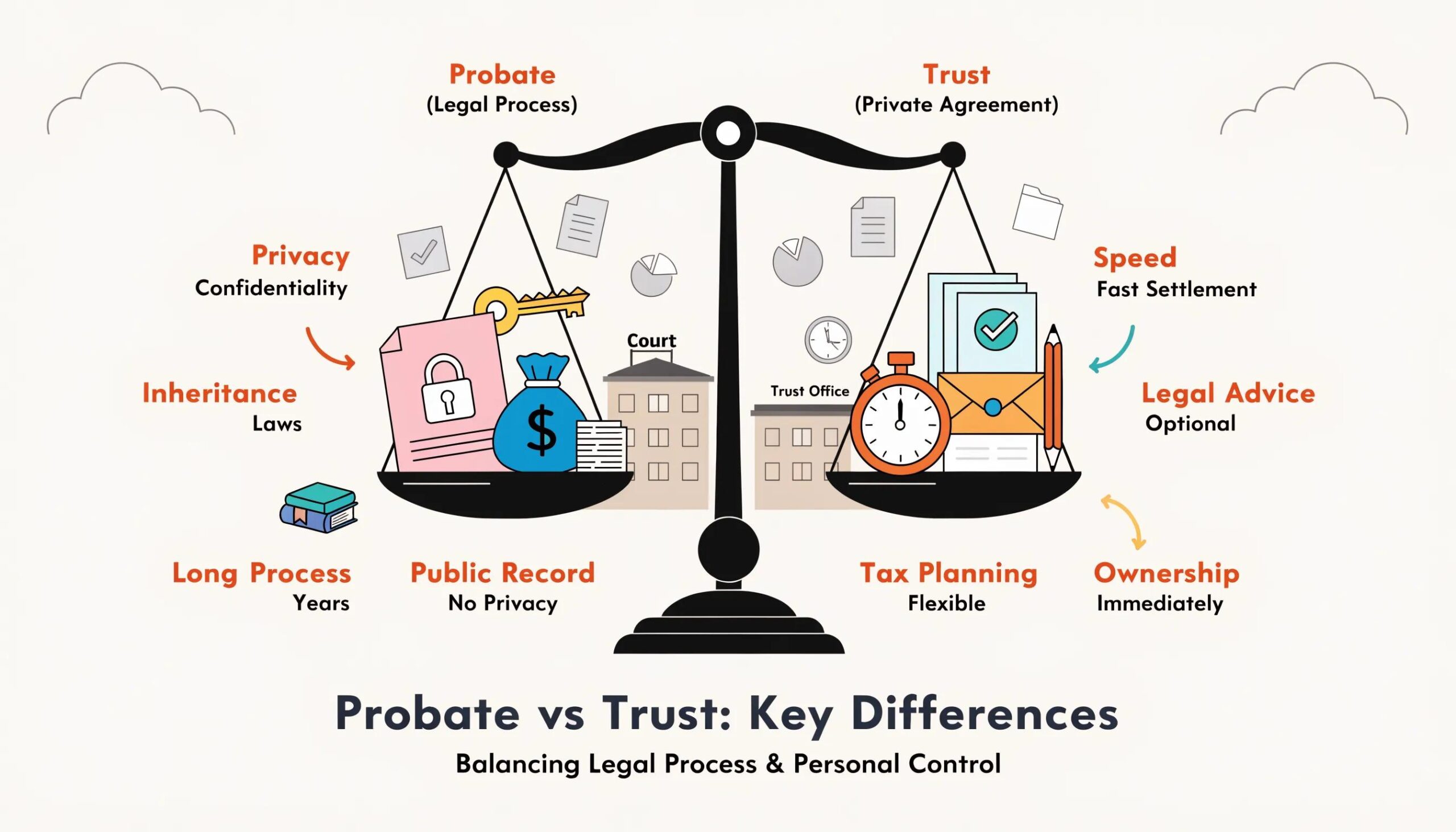
When considering estate management in Nevada, individuals often weigh the benefits and drawbacks of probate and trust administration. Probate is the legal process through which a deceased person’s assets are distributed under the jurisdiction of the court. In contrast, trust administration involves managing assets held in a trust according to the stipulated instructions of the trust document, bypassing certain legal protocols associated with probate.
Costs:
Probate and trust administration can vary significantly concerning costs. Here’s a comparative overview of typical expenses involved in both processes:
This overview illustrates a substantial cost difference, particularly highlighting the potentially lower costs associated with trust administration. Understanding these financial implications can guide individuals in selecting the most suitable option for their estate planning needs.
Benefits:
Both processes offer valuable benefits based on individual circumstances. Probate ensures a legalized distribution of assets, providing a formal structure for settling estates. Conversely, trust administration facilitates privacy since it bypasses the public court system and can allow for faster access to assets for beneficiaries. This can be particularly beneficial when time-sensitive financial matters arise.
Legal guidance plays a crucial role in both processes, ensuring that all legal requirements are met and that the chosen path effectively addresses the client’s needs. The Law Office of Sean M. Tanko, Ltd. provides expert legal guidance on navigating the complexities surrounding probate and trust administration, helping clients minimize costs and avoid extended judicial procedures.
What Are the Key Differences Between Probate and Trust Administration in Nevada?
The primary distinction between probate and trust administration lies in their structure and procedures. Probate requires court involvement, where the deceased’s will is validated and assets are distributed under judicial supervision. Conversely,